Free tool
Alberta scaffold
tag generator
Build a compliant Alberta scaffold tag, with the 21-day expiry worked out for you. Free, no account, and nothing you type is sent to us.
The five things s.326(5) asks for
Duty rating, date of last inspection, the competent worker who inspected it, any precautions, and the expiry date. All five, on every tag.
Expiry calculated, not guessed
A tag expires 21 calendar days after the inspection it records. Enter the inspection date and the expiry is worked out, including across daylight saving.
Built in your browser
Nothing you type leaves your device. Print the PDF, cut it out, and put it in the holder.
s.326(5)(a). CSA Z797:18 categorises platforms as light (up to 1.2 kN/m²), medium (to 2.4), heavy (to 3.6) or engineered above that. Take it from the scaffold design rather than assuming.
s.326(5)(c). The name of the competent worker who last inspected it.
s.326(5)(d). Prints as “None” if left blank.
Tag preview
SAFE FOR USE
Alberta OHS Code s.326 · Green tag
- Duty rating
- —
- Last inspected
- —
- Inspected by
- —
- Precautions
- None
- Expires
- —
Enter a valid inspection date to work out the expiry.
Two per sheet — s.326(1) requires one at each point of entry.
What Alberta actually requires
Alberta is the clearest case in Canada. Where Ontario and British Columbia require the inspection but no tag, section 326 of Alberta’s Occupational Health and Safety Code requires an employer to ensure a scaffold is colour coded using tags at each point of entry indicating its status and condition — green for “Safe for Use”, yellow for “Caution: Potential or Unusual Hazard”, red for “Unsafe for Use”.
The inspection cycle is narrower than the colour coding, and this is the part most often stated wrongly. It attaches to the site-built scaffolds the Code names individually — bracket, double-pole, needle-beam, outrigger, single-pole, suspended and swingstage. Those must be inspected and tagged by a competent worker before first use, and at intervals of not more than 21 calendar days while workers work from the scaffold or materials are stored on it.
Section 326(5) then does something no other regulator covered on this site does quite so plainly: it lists what the tag must carry. The duty rating of the scaffold. The date on which it was last inspected. The name of the competent worker who last inspected it. Any precautions to be taken while working on it. And the expiry date of the tag.
Section 326(4) sets that expiry at 21 calendar days after the inspection the tag records, and 326(6) gives it teeth: a worker must not use a scaffold that has a red tag, a green or yellow tag that has expired, or no tag at all. The exception in 326(7) is narrow — a competent worker involved in erecting, inspecting or dismantling it.
One further trap worth knowing. A listed scaffold that is erected but not immediately put into service, or not used for more than 21 consecutive calendar days, must carry a red tag at each point of entry until a competent worker inspects and re-tags it. Scaffolds left standing between trades are exactly the ones that quietly fall out of compliance.
Three things worth getting right
Every point of entry
The duty in s.326(1) is per point of entry, not per scaffold. A scaffold with three access points needs three tags showing the same status.
Three weeks, then it is void
A tag expires 21 calendar days after the inspection it records, whether or not anyone re-inspects. On a turnaround, that is a reprint for every scaffold, every three weeks.
Competent, not licensed
Alberta turns on “competent worker” as the legislation defines it. There is no tag number or licence to quote — what matters is who inspected it and when.
FAQs
Frequently Asked Questions
What the Code requires, how long a tag lasts, and which scaffolds the 21-day cycle covers.
Yes. Section 326(1) of Alberta’s Occupational Health and Safety Code requires an employer to ensure that a scaffold is colour coded using tags at each point of entry indicating its status and condition. That is a stronger position than most markets — in Ontario and British Columbia no tagging provision exists at all, and in the United Kingdom tagging is recommended but not mandatory.
Sources
- Alberta Occupational Health and Safety Code (Alberta Regulation 191/2021), Part 23 s.326 — Tagging requirements
- Government of Alberta — OHS Code Explanation Guide, Part 23: Scaffolds and Temporary Work Platforms
This page summarises published regulation and is not legal advice. Requirements differ by province and change over time.
More free tools

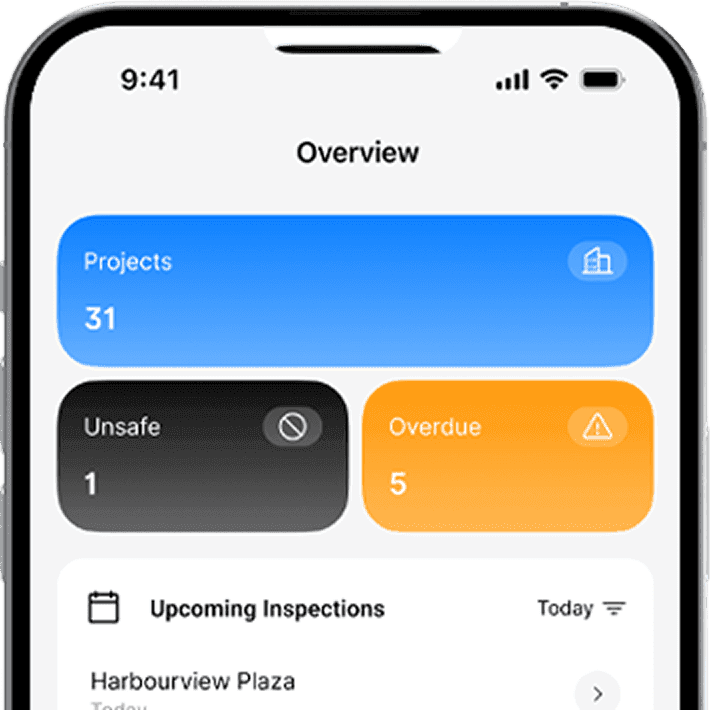
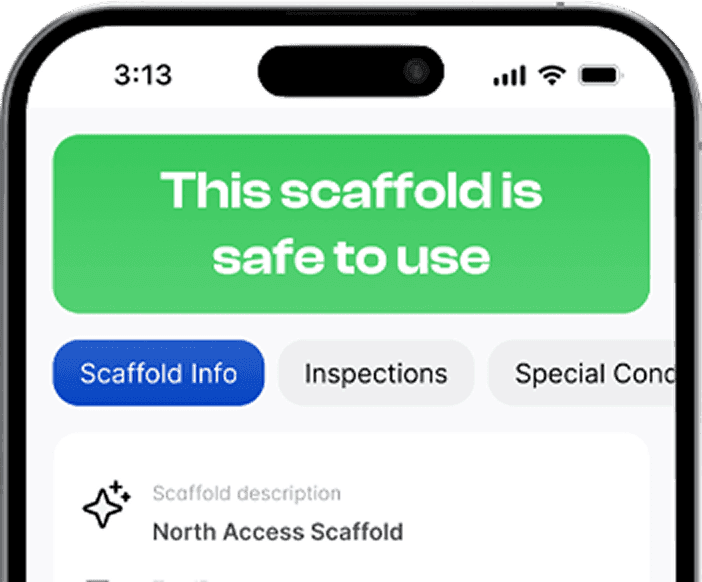
A tag that cannot expire unnoticed
Scafflinq replaces the printed tag with a QR scafftag anyone on site can scan — status, duty rating, limitations and every inspection since handover. Start free with 5 tags.