Free tool
Scaffold handover
certificate generator
Fill it in on your phone, tablet or laptop, sign it with your finger, and download a completed handover certificate as a PDF. Built to Ontario’s requirements. Free, no account, and nothing you type is sent to us.
Built in your browser
The certificate never leaves your device unless you choose to email it. We hold no copy.
Carries the s.130 statement
Records in writing whether the scaffold is erected in accordance with its design drawings — the statement O. Reg. 213/91 asks for.
Your logo, signed on site
Add your company logo, then sign with a finger or stylus. Space for the client to sign their acceptance.
- 1Client & site
- 2Scaffold company
- 3Scaffold details
- 4Certification
Your certificate is built in your browser. Nothing you type here is sent to us, and we keep no copy of it.
Handover on a Canadian site
A handover certificate records the moment a scaffold passes from the crew who built it to the people who will work on it — who erected it, what it was designed to carry, what it may be used for, and who is vouching for it.
Canada has no national scaffold regulation. Occupational health and safety is provincial, and the provinces genuinely disagree with one another, so there is no single Canadian answer and any tool claiming to produce one is overselling. This generator is built to Ontario’s requirements and says so plainly.
In Ontario a handover certificate is contract practice rather than a statutory requirement — much as in the United Kingdom. What the regulation does compel is narrower and easy to miss. Where a scaffold exceeds fifteen metres above its base support, or ten metres if it is built from a tube and clamp system, section 130 of O. Reg. 213/91 requires it to be designed by an engineer and erected in accordance with that design.
For those scaffolds, an engineer or a competent worker designated by the supervisor of the project must inspect the scaffold before it is used to confirm it matches the design drawings, and must state in writing whether it does. The constructor then keeps the design drawings and that written statement at the project for as long as the scaffold stands. That written statement is a specific obligation with no Australian or British equivalent, and it is why this generator asks the question directly rather than leaving it to a free-text note.
Below the height trigger none of that applies, and the certificate is simply the clearest evidence you have that the scaffold was complete and fit for use when you left it. Answer “below the height trigger” and the certificate prints as an ordinary handover record.
What applies after handover, by province
Ontario — keep the drawings and the statement
Section 130(5) requires the constructor to keep the design drawings and the written statement at the project while the scaffold is erected. Not at head office, and not produced afterwards on request — at the project, for the life of the scaffold.
Alberta — tag it, and re-tag every 21 days
A different artefact entirely. OHS Code s.326 requires a colour-coded tag at each point of entry, and for site-built scaffolds a competent worker must inspect and re-tag before first use and at intervals of no more than 21 calendar days. The tag expires 21 days after the inspection it records, and a worker must not use a scaffold with a red tag, an expired tag, or no tag.
British Columbia — inspect before use, every shift
Part 13 of the OHS Regulation requires a work platform and its components to be inspected before use on each shift and after any modification, with any dangerous condition remedied first. It specifies no tag and no written record, which makes a handover certificate the only durable evidence you are likely to have.
Competence is defined, not licensed
No Canadian province issues a scaffolder licence number the way Australia issues a high risk work licence. The test is whether the worker is competent as the statute defines it. In Ontario, Working at Heights training under O. Reg. 297/13 — delivered by a provider approved by the Chief Prevention Officer and valid three years — is what most workers on a scaffold actually hold.
FAQs
Frequently Asked Questions
Handover certificates, scaffold tags and what the rules in Canada actually ask for.
Not as such, and it varies by province. In Ontario there is no general duty to issue a handover certificate; clients routinely require one by contract. What O. Reg. 213/91 does require, for scaffolds over fifteen metres above the base support or over ten metres if tube and clamp, is that an engineer or a competent worker designated by the supervisor inspects the scaffold before use and states in writing whether it is erected in accordance with the design drawings, with the drawings and that statement kept at the project. Other provinces set their own rules — Alberta’s turn on tagging rather than certification.
Sources
- O. Reg. 213/91 (Construction Projects) under the Occupational Health and Safety Act, s.130
- Alberta Occupational Health and Safety Code (Alberta Regulation 191/2021), Part 23 s.326 — Tagging requirements
- WorkSafeBC — Occupational Health and Safety Regulation, Part 13 (Ladders, Scaffolds and Temporary Work Platforms)
- Government of Ontario — Working at heights training
This page summarises published regulator guidance and is not legal advice. Requirements differ by jurisdiction and change over time.

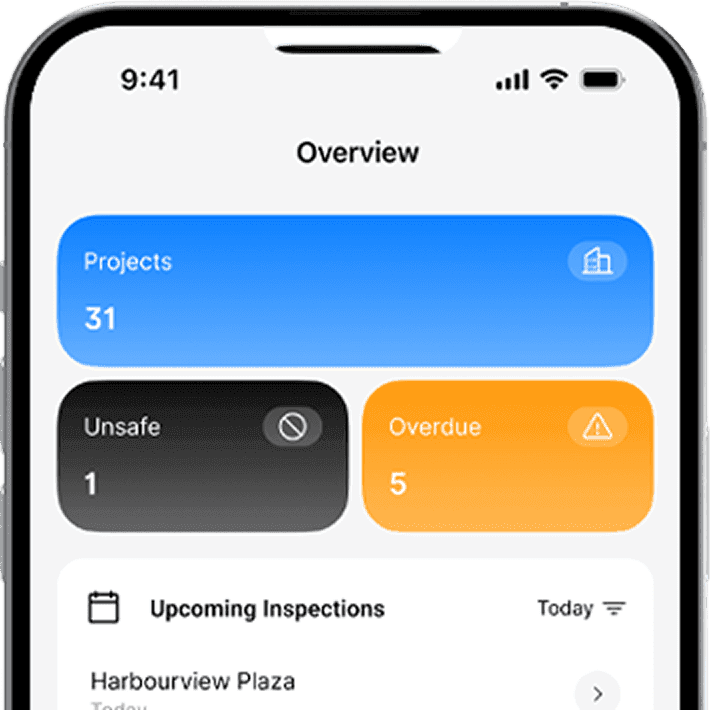
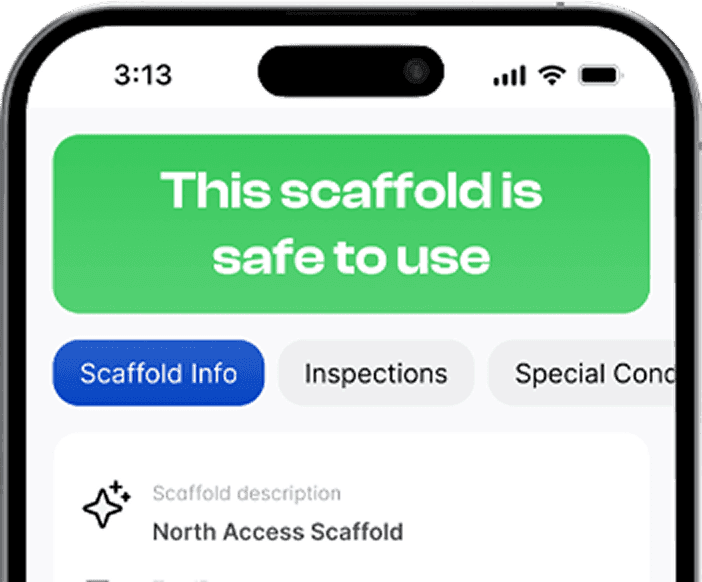
One tag, the whole scaffold record
Scafflinq keeps the scaffold, its handover and every inspection since behind a QR scafftag anyone on site can scan. Start free with 5 tags.