Free tool
Scaffold handover
certificate generator
Fill it in on your phone, tablet or laptop, sign it with your finger, and download a completed handover certificate as a PDF. Free, no account, and nothing you type is sent to us.
Built in your browser
The certificate never leaves your device unless you choose to email it. We hold no copy.
Current standards
References AS 4576:2020, which superseded AS/NZS 4576:1995 — the version most templates still cite.
Your logo, signed on site
Add your company logo, then sign with a finger or stylus. Space for the client to sign their acceptance.
- 1Client & site
- 2Scaffold company
- 3Scaffold details
- 4Certification
Your certificate is built in your browser. Nothing you type here is sent to us, and we keep no copy of it.
What a handover certificate actually is
In the model WHS jurisdictions, a scaffold from which a person or thing could fall more than 4 metres must not be used until the person with management or control of it receives written confirmation from a competent person that construction has been completed. The handover certificate is that written confirmation. It is one of the few documents in Australian scaffolding practice that is genuinely required rather than customary.
It is also widely missed. SafeWork NSW visited 343 construction sites between August and December 2024 under its Scaff Safe programme and found that 27% had no written confirmation of a compliant scaffold from a competent person. A further 23% had scaffolds altered by someone other than a licensed scaffolder. The operation issued 613 compliance notices and $135,900 in on-the-spot fines.
That distinction matters, because a scaffold tag is not a substitute. SafeWork NSW puts it plainly in its Scaffolding Industry Safety Standard: tags “typically do not include the minimum amount of information required for a valid handover certificate, and thus cannot be used as such.”
Victoria is the exception to watch. Victoria never adopted the harmonised WHS laws, so there is no Victorian regulation 225 and no Victorian statutory 30-day inspection interval — duties there arise under the Occupational Health and Safety Act 2004, the OHS Regulations 2017 and WorkSafe Victoria’s Scaffolding Industry Standard.
What happens after handover
Keep it on site
Keep the certificate available at the workplace until the scaffold is dismantled. SafeWork NSW asks for a copy to be available on site for the duration of the project.
Inspect at least every 30 days
Where a person or thing could fall more than 4 metres, the scaffold and its supporting structure must be inspected by a competent person at least every 30 days. Thirty days is a maximum interval, not a schedule.
And after repairs or an incident
Use must not resume after repairs, or after an incident that could reasonably be expected to affect the scaffold’s stability, until a competent person has inspected it. Note that the Australian rule has no “after alteration” trigger — that one belongs to the UK regulations and is frequently imported by mistake.
Record who, when and where
Safe Work Australia’s guidance asks for the location, comments, date and time of each inspection, the relevant design or specification reference, and the person who carried it out.
FAQs
Frequently Asked Questions
Handover certificates, scaffold tags and what the rules in Australia actually ask for.
In substance, yes. WHS Regulation 225 requires written confirmation from a competent person that construction of the scaffold has been completed before the scaffold is used, where a person or thing could fall more than 4 metres. The handover certificate is how that confirmation is given. Victoria is not a model WHS jurisdiction and its duties arise under the OHS Act 2004 and OHS Regulations 2017 instead.
Sources
- SafeWork NSW — Scaffolding Industry Safety Standard (March 2022)
- Safe Work Australia — Guide to scaffold inspection and maintenance
- WorkSafe Queensland — Scaffolding Code of Practice 2021
- SafeWork NSW — Scaff Safe in Construction 2024 findings report (343 sites, Aug–Dec 2024)
- WorkSafe Victoria — Scaffolding industry standard
This page summarises published regulator guidance and is not legal advice. Requirements differ by jurisdiction and change over time.

Stop typing the same scaffold twice
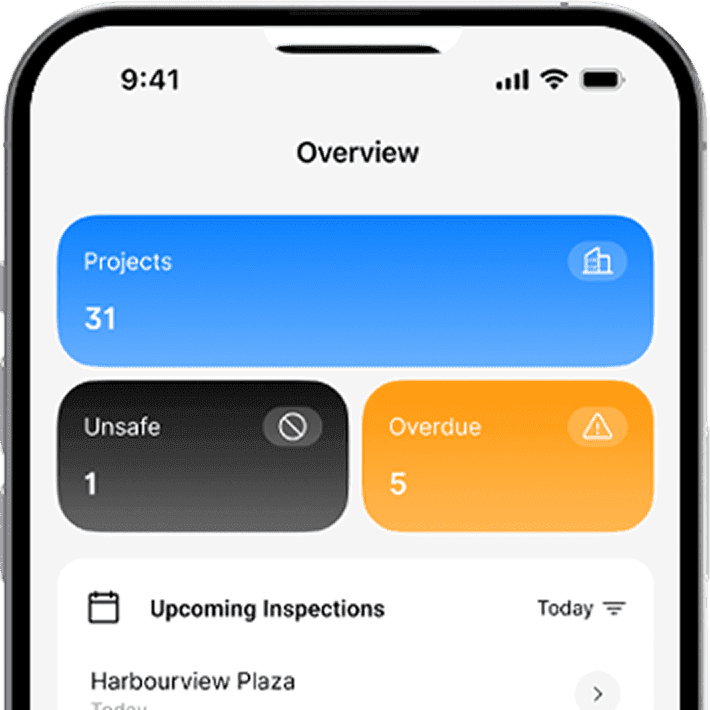
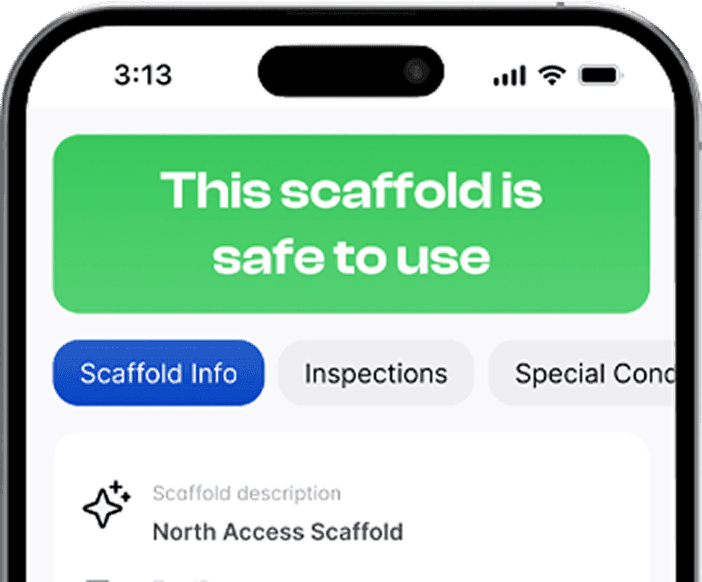
Scafflinq keeps the scaffold, its handover and every inspection since in one record behind a QR scafftag. Start free with 5 tags.